
A History of U.S. Brazil Relations
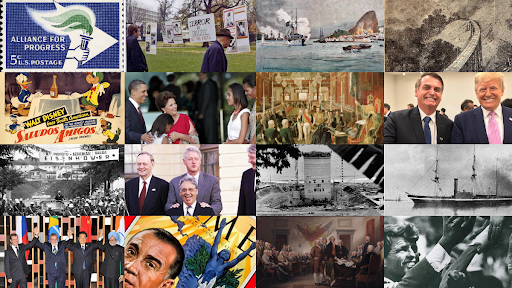
The United States and Brazil have had a complicated relationship from the onset of their coexistence. Bound together by multiple similarities, like their continental size in the Americas; a history of slavery and colonialism; massive immigration from Europe, Asia and the Middle East; and diversity of ethnicities, they also diverge in numerous ways. The uneven balance of power between Brazil and the United States has meant that, even if leaders from both countries have at times been eager to establish deeper partnerships and understanding, they have often had clashing interests and world views.
To gain a comprehensive understanding of this complicated relationship, it is necessary to explore its different periods and examine the various incentives, leaders, and global conditions that have shaped its history. This material was prepared for a course on U.S.-Brazilian relations.
The Monroe Doctrine and the U.S. Recognition of Independent Brazil
Brazilian Slave Rebellions, Abolitionists, and the U.S. Civil War
Confederados, and Growing U.S. Influences in Brazil
The New Republic and the Beginning of Anglo-U.S. Disputes in Brazil
World War I and the Great Depression
Brazil, the United States, and World War II
Vargas, Eisenhower, Kubitschek, and the Cold War
Goulart, Gordon, and the 1964 Coup d’État
The Military’s Foreign Policies and the United States
Culture, Human Rights, and Grassroots Foreign Policy
FHC and the United States in the Era of Globalization
Lula and a Turn to the Global South
